You’ve just finished a meal, but instead of feeling satisfied, your stomach feels heavy, bloated, and vaguely uncomfortable. Or you’re in the car on a winding road and the familiar wave of nausea is building. Or you wake up in the morning and your gut just feels… off. Most of us know these feelings intimately, and most of us have reached for something — antacids, peppermint, or just hoping it passes — without much success.
Ginger has been the answer to all three of these problems for more than 5,000 years. Used in Ayurvedic medicine, Traditional Chinese Medicine, ancient Greek healing traditions, and virtually every major herbal system in between, it’s one of the most universally trusted digestive herbs in human history. And unusually for a traditional remedy, it’s also one of the most thoroughly studied: hundreds of clinical trials, mechanistic studies, and meta-analyses have examined exactly how and why ginger works — and the results are genuinely impressive.
In this complete guide, you’ll learn:
- What makes ginger biologically active (and why dried ginger is often stronger than fresh)
- How it supports digestion, from the stomach to the intestines
- What the science actually says about ginger for nausea — including pregnancy, chemotherapy, and travel sickness
- How ginger affects gut health, IBS, and the microbiome
- Practical dosage guidance for each specific goal
- Which form to use and when
- Who should be careful
For recipe-focused use of ginger alongside other powerful digestive herbs, check out my Functional Herbal Teas for 2026 guide — it has several gut-supportive blends you can start brewing today.
Table of Contents
What Makes Ginger So Powerful? The Active Compounds
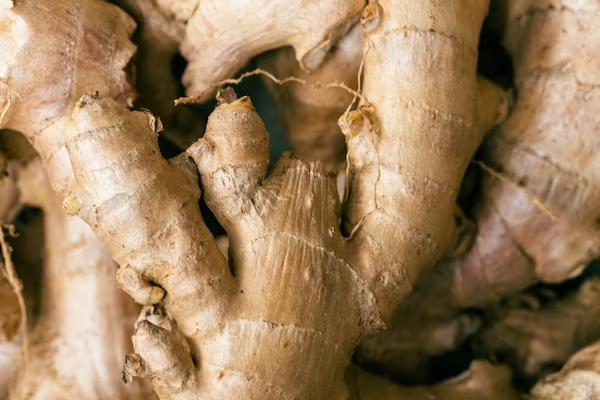
Ginger (Zingiber officinale) isn’t just one thing. It’s a complex mixture of bioactive compounds that work through multiple pathways simultaneously — which is part of why it shows up as effective across such a wide range of digestive and inflammatory conditions. Understanding the key compounds helps you make smarter choices about which form of ginger to use and when.
Gingerols — The Fresh Compound
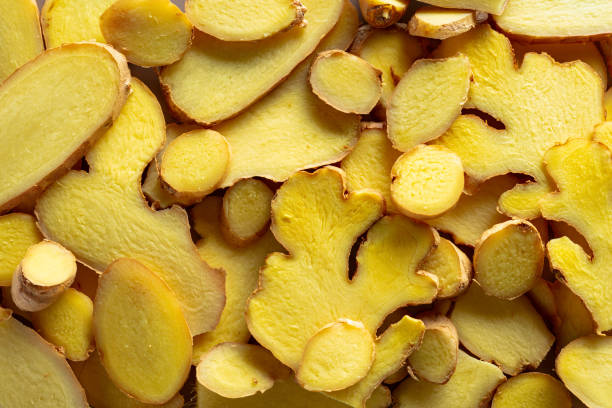
Gingerols are the primary bioactive molecules in fresh ginger root. They’re responsible for that characteristic sharp, slightly spicy bite you get when you chew a piece of raw ginger, and they’re the compounds most associated with ginger’s anti-inflammatory and antioxidant properties. The most studied of these is 6-gingerol, which has been shown to inhibit inflammatory pathways, support immune function, and reduce oxidative stress in cells.
Shogaols — The Dried and Heated Compound
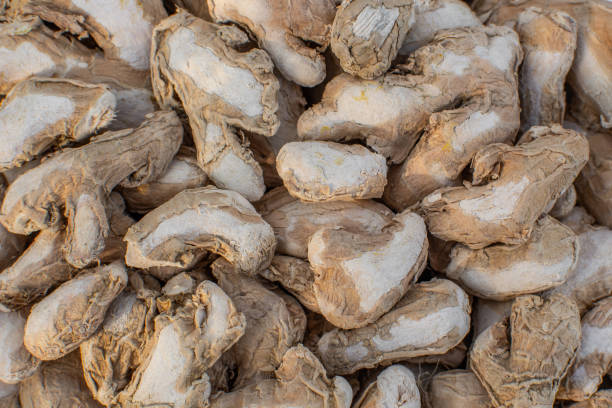
Here’s something that surprises most people: dried or cooked ginger is often more medicinally potent than fresh, not less. When fresh ginger is dried or heated — whether during cooking, drying, or the production of ginger powder — gingerols undergo a chemical transformation called dehydration and are converted into shogaols. Shogaols, particularly 6-shogaol, have been shown in studies to be up to twice as potent as their gingerol counterparts in anti-inflammatory action.
This means the form of ginger you choose genuinely matters depending on your goal. Fresh ginger is ideal for daily digestive support and culinary use; dried ginger or standardised extracts are better suited to therapeutic purposes where you need consistent, stronger dosing.
Paradols and Zingerone
Two additional compounds round out ginger’s active profile. Paradols are antioxidant compounds present in smaller amounts that contribute to ginger’s broader anti-inflammatory action. Zingerone forms during the cooking process from gingerols and has a sweeter, less pungent flavour — it’s partly responsible for the milder taste of cooked ginger versus raw.
How Ginger Actually Works in Your Body
When you eat or drink ginger, gingerols and shogaols are absorbed through the intestinal wall and partially processed by the liver. But a meaningful portion remains active in the gut itself — and that’s where much of the digestive magic happens.
In the gut wall, these compounds work on inflammatory pathways by inhibiting an enzyme called COX-2 (cyclooxygenase-2). COX-2 is responsible for producing prostaglandins — small signalling molecules that trigger inflammation, pain, and swelling. If that mechanism sounds familiar, it’s because it’s the same one targeted by ibuprofen. The key difference is that ginger’s action is milder, more localised, and doesn’t carry the gastric side effects associated with long-term NSAID use.
On top of that, gingerols and shogaols bind to TRPV1 receptors in the gut wall — the same receptors that respond to capsaicin in chilli peppers. This triggers a warming sensation and increases blood flow to the stomach lining, which stimulates digestive secretions and improves motility. It’s essentially a gentle activation of your digestive system from the inside.
Ginger for Digestion — How It Works
This is the application with the strongest and most consistent body of evidence behind it. Ginger supports digestion through at least three distinct mechanisms, each relevant to a different part of the digestive process.
Speeding Up Gastric Emptying
Gastric emptying refers to the rate at which food moves from your stomach into the small intestine. When this process is slow — a condition called gastroparesis in its clinical form — food sits in the stomach longer than it should, causing bloating, heaviness, acid reflux, and that uncomfortable “brick in the stomach” feeling after meals.
Multiple clinical studies have demonstrated that ginger meaningfully accelerates gastric emptying in both healthy people and those with delayed gastric motility. One randomised controlled trial published in the European Journal of Gastroenterology & Hepatology found that 1.2 g of ginger before a meal significantly increased gastric emptying rate compared to placebo. In practical terms: ginger taken before or during a heavy meal helps your stomach process and move that food along faster, reducing the post-meal discomfort that many people accept as just how they feel after eating.
Stimulating Digestive Enzymes
Beyond gastric emptying, ginger increases the activity of key digestive enzymes — specifically pancreatic lipase (which breaks down dietary fat) and amylase (which breaks down carbohydrates). These enzymes are produced by the pancreas and released into the small intestine, and their efficiency directly affects how completely and comfortably your food is digested.
This is why ginger has traditionally been used as a culinary spice in rich, fatty, heavy meals across so many different food cultures — from Indian curries to Chinese braised dishes to gingerbread after a holiday feast. The traditional wisdom and the biochemistry turn out to be pointing at the same thing.

Reducing Gut Inflammation
Chronic low-grade inflammation in the gut wall is increasingly recognised as a driver of a wide range of digestive complaints — from generalised discomfort and irregular bowel habits to more specific conditions like IBS, inflammatory bowel disease, and leaky gut syndrome. Ginger addresses this through the COX-2 inhibition described above, as well as through its ability to suppress TNF-α — a pro-inflammatory cytokine (a type of signalling protein) that plays a central role in chronic gut inflammation.
The practical significance: consistent daily ginger use isn’t just about acute symptom relief. Over time, its anti-inflammatory action helps create a calmer, less reactive gut environment — which is why many people who use ginger regularly report that their digestive baseline improves, not just individual meals.
Ginger for Nausea — What the Science Says
If ginger has one application that’s better documented than any other, it’s nausea. The research here spans multiple clinical populations and extends back decades, making it one of the most evidence-backed natural anti-emetics available.
Morning Sickness and Pregnancy Nausea
This is the most studied application, and the results are consistently positive. Multiple randomised controlled trials have found that 1 to 1.5 g of ginger per day significantly reduces the frequency and severity of nausea and vomiting during pregnancy, with several studies showing effects comparable to vitamin B6 — the conventional first-line recommendation for morning sickness.
Ginger is generally considered safe during the first trimester at these doses, with a strong traditional safety record across thousands of years of use. As always, it’s worth discussing with your doctor before starting any supplement during pregnancy, but ginger tea or modest supplementation is among the gentler and better-supported options available.

Chemotherapy-Induced Nausea
The evidence for ginger in chemotherapy-related nausea is more mixed — some trials show clear benefit, others show modest effects — but the mechanistic understanding is fascinating and worth explaining.
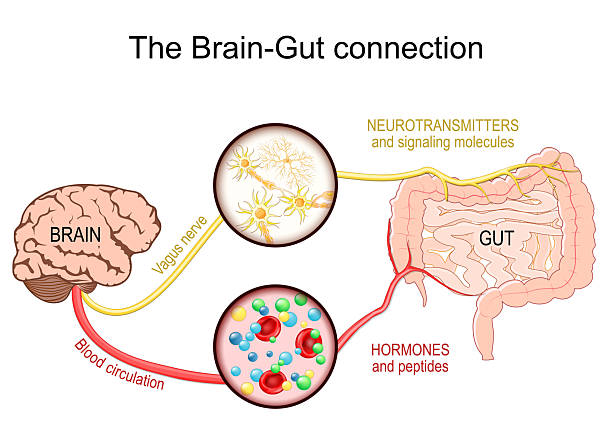
To understand why ginger helps with nausea at all, it helps to know a little about how nausea works neurologically. Nausea isn’t primarily a gut sensation — it’s a brain event. Signals from the gut travel up to a region in the brainstem called the area postrema, sometimes referred to as the brain’s “vomiting centre.” These signals travel via the vagus nerve — a long, winding nerve that connects the brainstem to virtually every major organ in the chest and abdomen. Specifically, it’s a subset of vagal nerve fibres called C-fibres that carry nausea signals upward from the gut wall.
Here’s where ginger’s mechanism becomes genuinely interesting: shogaols appear to partially block the activation of these vagal C-fibres at the level of the gut wall, meaning fewer nausea signals reach the brainstem in the first place. This is fundamentally different from how most anti-nausea medications work — they block receptors centrally, in the brain itself. Ginger works further down the chain, reducing the signal before it even arrives. It’s a more peripheral and arguably more elegant mechanism, and it’s part of why ginger can complement rather than compete with conventional anti-emetics.
Motion Sickness and Travel Nausea
The evidence for motion sickness is less robust than for pregnancy nausea, but traditional use is very strongly documented and the mechanistic plausibility is sound. The practical recommendation that comes out of both the research and traditional practice: take 1 g of ginger in capsule form approximately 30 minutes before travel. This gives the compounds time to reach the gut wall and begin their activity before the vestibular challenge begins. Ginger tea is a gentler option for shorter journeys or milder susceptibility.
Ginger & Gut Health — The Bigger Picture
Beyond acute digestive support and nausea, ginger has a broader and more complex relationship with gut health that’s increasingly drawing research attention.
Does Ginger Help IBS?
Irritable bowel syndrome (IBS) is a chronic condition characterised by abdominal pain, bloating, irregular bowel habits, and significant impact on quality of life. The evidence for ginger in IBS is currently limited but promising: several smaller studies have found that ginger reduces cramping and bloating in IBS patients, and the likely mechanism involves serotonin receptor modulation in the gut.
Specifically, ginger appears to interact with 5-HT3 receptors in the intestinal wall — the same receptors targeted by a class of IBS medications called 5-HT3 antagonists. Serotonin (yes, the same neurotransmitter associated with mood) plays a crucial role in regulating gut motility and sensitivity. Approximately 95% of your body’s serotonin is actually produced in the gut, not the brain, and it acts as a local signalling molecule that coordinates the rhythmic muscle contractions of your intestines. By modulating 5-HT3 receptors, ginger can help calm an overactive gut response — reducing both the cramping and the urgency that characterise IBS flares.
Important caveat: IBS varies significantly between individuals, and ginger doesn’t work equally well for everyone. Some people with IBS-D (diarrhoea-predominant) find ginger too stimulating. Start with small amounts and observe your response carefully.

Ginger and the Gut Microbiome
This is an emerging research area with exciting early data. Pre-clinical studies suggest that gingerols may selectively support the growth of beneficial Lactobacillus species in the gut microbiome while inhibiting the growth of certain pathogenic bacteria. The microbiome research is still in its early stages for ginger specifically — most of the robust data comes from animal and in vitro studies rather than large-scale human trials — but the direction of travel is interesting. A gut environment with more Lactobacillus is generally associated with better digestion, stronger immune function, and reduced inflammatory activity.
Ginger for Bloating and Gas
For many people, this is the most immediately relevant application. Bloating and gas are typically caused by a combination of slow gastric emptying, incomplete digestion of fermentable carbohydrates, and spasm of the smooth muscle in the intestinal wall.
Ginger addresses all three: it speeds gastric emptying (less time for food to ferment), stimulates digestive enzymes (more complete digestion upstream), and relaxes intestinal smooth muscle through a calcium channel-blocking mechanism. Calcium is required for smooth muscle contraction — when calcium is partially blocked from entering muscle cells, those cells contract less forcefully, reducing cramping and allowing trapped gas to move through and disperse more easily.
How Much Ginger Per Day? Dosage Guide
One of the most common questions — and one where getting specific actually makes a real difference to results. Here’s a practical dosage guide by goal:
| Goal | Recommended Dose | Best Form |
|---|---|---|
| General digestive support | 1–2 g per day | Fresh tea, cooking |
| Nausea (pregnancy) | 1–1.5 g per day | Capsules or tea |
| Bloating / IBS | 1–2 g per day | Capsules or fresh root |
| Anti-inflammatory support | 2–3 g per day | Standardised extract capsules |
| Motion sickness (preventive) | 1 g, 30 min before travel | Capsules |
Maximum safe dose for healthy adults: 4 g per day. Above this threshold, some people experience heartburn, loose stools, or mouth irritation.
An important note on equivalencies: Fresh ginger, dried ginger powder, and standardised extracts are not interchangeable on a gram-for-gram basis. One gram of dried ginger powder is considerably more concentrated than one gram of fresh root, and a standardised extract specifies the exact percentage of active compounds. When using fresh ginger in tea or cooking, a rough guide is that 10 g of fresh root (a piece about the size of your thumb) provides approximately 1 g of bioactive compounds — though this varies with the freshness and variety of the root.
Fresh vs. Dried vs. Supplement — Which Form Is Best?
The answer depends on your goal, and understanding the biochemistry behind each form helps you make the right choice.
Fresh ginger root contains the highest concentration of gingerols and is ideal for daily culinary and tea use. It’s the most enjoyable form to work with — versatile, aromatic, and easy to incorporate into meals. The flavour is bright, sharp, and warming. Best used for everyday digestive maintenance and as a foundation for good gut health over time.
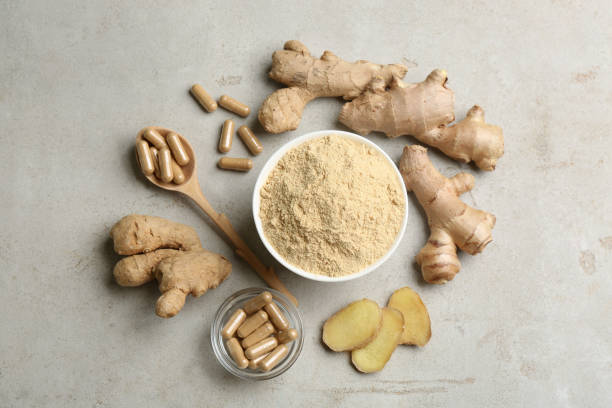
Dried ginger powder has a higher concentration of shogaols due to the heat transformation that occurs during drying. Because shogaols are more lipid-soluble (fat-soluble) than gingerols, they’re absorbed more quickly and efficiently across the gut wall. For anti-inflammatory and stronger digestive purposes, dried ginger can actually outperform fresh — despite the fact that fresh ginger feels more “potent” simply because of its stronger flavour. The conversion is straightforward: when you dry or heat ginger, water molecules are removed from gingerols through a chemical reaction, producing the structurally different shogaols that are both faster-absorbing and more potently anti-inflammatory.
Standardised extract capsules are the most reliable form for therapeutic purposes. A quality supplement will specify the percentage of gingerols and/or total pungent compounds on the label, allowing you to dose consistently. This is the form to use if you’re addressing a specific health goal — IBS, chronic inflammation, or regular nausea management — where consistency matters.
Ginger tea bags represent the mildest end of the spectrum. Most commercial ginger tea bags contain a relatively small amount of dried ginger and produce a gentle, warming infusion that’s excellent as a daily ritual and for mild digestive complaints, but shouldn’t be relied upon for therapeutic dosing.
Easy Ways to Use Ginger Daily
The best form of ginger is the one you’ll actually use consistently. Here are practical, enjoyable ways to work it into your daily routine:
Fresh ginger tea is the simplest and most rewarding starting point. Cut a 2 to 3 cm piece of fresh ginger root into thin slices, add to a mug with 250 ml of water just off the boil, steep covered for 8 to 10 minutes, and strain. Add a squeeze of lemon and a small amount of honey to balance the sharpness. Drink before or after meals for digestive support. This is the base recipe I use in several blends in my Functional Herbal Teas for 2026 guide — including the ginger-peppermint-fennel gut soothe blend that remains one of my most-used recipes.
Golden milk with ginger combines ginger with turmeric and black pepper in warm plant-based milk for a compound anti-inflammatory effect. The three ingredients work synergistically: turmeric provides curcumin, black pepper dramatically increases curcumin’s absorption, and ginger adds its own anti-inflammatory and digestive compounds on top. A turmeric deep dive is coming soon — in the meantime, the immunity tea recipe in Functional Herbal Teas for 2026 gives you a solid starting recipe.
Ginger in smoothies works well with frozen fruit, banana, and a protein source. Start with half a teaspoon of fresh grated ginger or a quarter teaspoon of dried powder — ginger intensifies as it blends and can easily dominate if you overdo it.
Ginger shots (concentrated blends of ginger juice, lemon, and sometimes turmeric or cayenne) have become popular in wellness culture, and they do deliver a significant dose of bioactives in a small volume. The caveat: on an empty stomach, a concentrated ginger shot can be harsh for people with sensitive stomachs or acid reflux. Take them after a small meal or dilute them if you experience discomfort.
Cooking with ginger is the most effortless integration of all — adding fresh or dried ginger to soups, stir-fries, dressings, and marinades means you’re consistently getting small, cumulative amounts throughout the day without any additional effort. Consistent small doses over time is often more beneficial than occasional large ones.

Who Should Be Careful With Ginger?
Ginger has an excellent safety profile for most people, but a few situations require some care:
Blood thinners (warfarin, aspirin, clopidogrel): Ginger has a mild anticoagulant effect — it reduces platelet aggregation (the clumping of blood cells that forms clots). At culinary amounts this is generally not a concern, but at therapeutic doses (2–4 g per day), it can meaningfully interact with blood-thinning medication. Always discuss with your doctor before supplementing with ginger if you’re on anticoagulant therapy.
Gallstones: Ginger stimulates bile production and the release of bile from the gallbladder. For most people, this is beneficial for fat digestion, but for those with existing gallstones, the increased bile flow can trigger pain or complications. Avoid therapeutic doses if you have a history of gallstones.
Pregnancy: As noted above, up to 1.5 g per day is considered safe and well-studied during the first trimester for nausea management. Avoid high doses (above 2 g) in the third trimester, as ginger’s effect on uterine muscle tone at high doses is not well characterised. Always check with your midwife or doctor.
Acid reflux and GERD: Ginger is often beneficial for reflux because it speeds gastric emptying, but in some individuals — particularly at high doses — it can aggravate reflux symptoms. Start with small amounts and observe your response.
This article is for informational purposes only and does not constitute medical advice. If you have an existing health condition or are taking medication, consult a healthcare provider before making significant changes to your supplement routine.
Frequently Asked Questions
Does ginger help with bloating?
Yes — and this is one of ginger’s most consistently reported practical benefits. It works through three complementary mechanisms: speeding up gastric emptying (so food spends less time fermenting in the stomach), stimulating digestive enzymes (improving how completely food is broken down before it reaches the colon), and relaxing intestinal smooth muscle (allowing trapped gas to move through and disperse). For best results, take 1 to 2 g of fresh or dried ginger about 20 to 30 minutes before meals, or drink ginger tea immediately after eating.
How much ginger should I take for digestion?
For general digestive support, 1 to 2 g per day is the most consistently effective range across clinical studies. This translates to roughly one cup of fresh ginger tea (made from a 2–3 cm piece of root), one teaspoon of dried ginger powder added to food or warm water, or a standardised supplement capsule specifying its gingerol content. For more acute issues like IBS or chronic inflammation, 2 to 3 g per day from a standardised extract is better suited.
Can I take ginger every day?
Yes, and for most people this is the most effective approach. The benefits of ginger — particularly its anti-inflammatory and microbiome-supportive effects — build cumulatively with consistent daily use. Unlike some herbs that require cycling, ginger is safe for continuous daily use at normal doses. The practical upper limit for healthy adults is around 4 g per day; staying below this avoids the risk of heartburn or digestive irritation.
Is ginger tea good for IBS?
Ginger tea can be helpful for the bloating, cramping, and discomfort associated with IBS, primarily through its smooth muscle-relaxing and serotonin receptor-modulating effects. However, IBS is a varied condition and responses to ginger differ. People with IBS-C (constipation-predominant) tend to respond well to ginger’s motility-stimulating effects; those with IBS-D (diarrhoea-predominant) should start with small amounts and monitor carefully. Combining ginger with peppermint — which has its own strong evidence base for IBS — is a well-studied pairing that many people find more effective than either herb alone.
Ginger before or after meals — which is better?
It depends on your goal. For improving digestion and reducing post-meal bloating, ginger before a meal (15 to 30 minutes prior) primes the digestive system — it stimulates enzyme production and increases gastric motility before food arrives. For soothing discomfort you’re already experiencing after eating, ginger tea immediately after a meal works well. For nausea that’s not meal-related, timing is less critical — take it when the symptoms begin or, for predictable nausea like travel sickness, 30 minutes before the anticipated trigger.
Does ginger help with leaky gut?
Leaky gut (intestinal permeability) refers to a state where the tight junctions between intestinal cells become compromised, allowing substances to pass into the bloodstream that shouldn’t. It’s associated with chronic inflammation, autoimmune conditions, and a range of digestive symptoms. While there are no large-scale human trials specifically on ginger for leaky gut, its anti-inflammatory action (via COX-2 inhibition and TNF-α suppression) and potential microbiome-supportive effects are mechanistically relevant. Ginger is unlikely to be sufficient as a standalone intervention for established leaky gut, but as part of a broader gut-healing approach — alongside dietary changes and targeted probiotics — it’s a reasonable and well-tolerated addition.
Start Using Ginger Today
Ginger sits in a rare category: a plant medicine with thousands of years of traditional use behind it and hundreds of clinical studies confirming that the tradition was onto something real. Whether you’re dealing with post-meal bloating, recurring nausea, chronic gut inflammation, or simply want to support your digestive health proactively, ginger offers accessible, well-evidenced support in a form that’s cheap, widely available, and genuinely pleasant to use.
Start with the simplest possible step: a cup of fresh ginger tea before or after your next meal. Stay with it consistently for two weeks, and pay attention to how your gut responds. Most people notice a difference before the end of that first week.
For more gut-supportive herbal blends — including a ginger-peppermint-fennel digestion tea and a turmeric-ginger immunity latte — explore my Functional Herbal Teas for 2026 guide. And if you’re building a broader herbal wellness routine, my Complete Guide to Adaptogens covers how herbs like ginger fit into the bigger picture of stress, energy, and vitality.
Coming soon: Peppermint for Gut Health & Focus — the natural next step in this series.