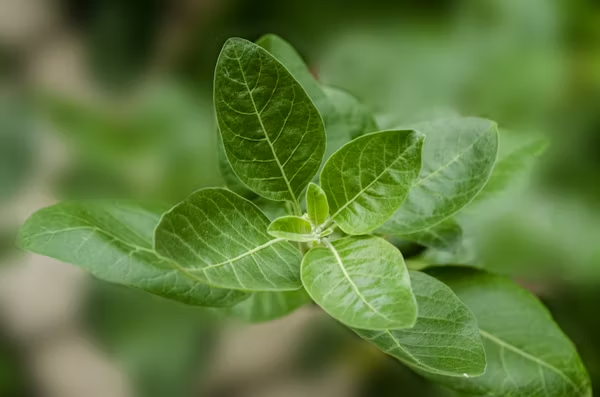
Back to Top 5 Stress Herbs overview
Lemon balm for anxiety & sleep: benefits, calm-focus paradox, dosage (tea, extract, capsules), safety, lemon balm vs ashwagandha vs rhodiola. Evidence-based 2026 guide.
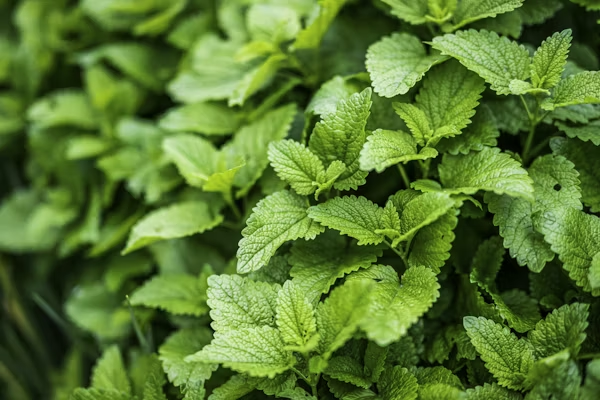
Table of Contents
1. Why a Deep Dive on Lemon Balm?
If you’re searching for a gentle, natural remedy to quiet anxiety or invite better sleep, lemon balm likely caught your eye. This fragrant herb pops up in calming teas, sleep blends, and soothing digestive formulas. Fans praise it for its ability to calm anxious minds, sharpen focus, and settle a fluttery stomach.
What makes lemon balm unique is its ability to soothe your nerves without causing drowsiness. It helps you achieve calm and clarity simultaneously- a phenomenon herbalists refer to as the “calm-focus paradox.”
This guide is all about lemon balm:
- What it actually is and where it comes from
- What the science says it can help with (especially anxiety, sleep, and cognitive function)
- How it seems to work in the brain and body
- Which forms and doses are used in studies
- And, importantly, who should be careful or avoid it
Let this guide be your companion if you’re considering weaving lemon balm into your daily routine for stress relief, nervous tension, or a softer path to sleep.
2. Lemon Balm Profile: What It Is & Where It Comes From
Botanical basics
Lemon balm (Melissa officinalis) is a fragrant member of the mint family (Lamiaceae), closely related to peppermint, spearmint, and lavender. It has:
- Bright green, deeply veined leaves with a wrinkled texture
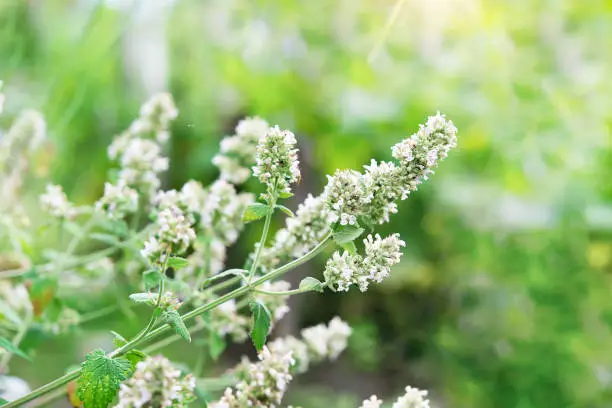
- Small white or pale yellow flowers that bloom in summer and attract bees
- A fresh, lemony scent when the leaves are crushed
- A natural habitat in the Mediterranean and Western Asia, though it now grows widely across Europe, North America, and temperate regions worldwide
Lemon balm is easy to grow and often spreads quickly in gardens, showing how hardy and resilient it is.
Traditional names and historical use
The name “Melissa” comes from the Greek word for “honey bee,” reflecting the plant’s attraction to bees and its use by beekeepers to calm hives. Traditional names include:
- Balm or sweet balm in English herbalism
- Melissa in European medical texts
- Honey plant or bee balm (but real bee balm is another plant called Monarda)
Lemon balm has been used medicinally for over 2,000 years:
- Ancient Greece and Rome: Physicians like Dioscorides and Pliny the Elder recommended lemon balm for wounds, nervous complaints, and “gladdening the heart.”
- Medieval Europe: Paracelsus called it the “elixir of life.” Carmelite monks made a famous lemon balm cordial (Carmelite water) for nervous headaches and digestive upset.
- Renaissance herbalism: Nicholas Culpeper praised lemon balm for “driving away all troublesome cares and thoughts out of the mind, arising from melancholy.”
- Traditional Persian medicine: Used for palpitations, anxiety, and insomnia.
Over the centuries, people have valued lemon balm as a gentle nervine – an herb that calms and supports the nervous system without causing strong sedation.
Taste and energetic profile
- Taste: Fresh, lemony, slightly sweet, mildly astringent
- Aroma: Bright citrus with subtle mint undertones
- Energetic quality: In herbal traditions, lemon balm is seen as cooling, soothing, and uplifting, especially for people who feel hot, restless, or mentally unsettled from stress.
Modern label: nervine and mild sedative
Today, herbalists and researchers classify lemon balm as:
- A nervine: An herb that supports the nervous system, easing tension without causing drowsiness in normal doses
- A mild sedative: In higher doses or when combined with other calming herbs, it can promote sleep
- A carminative: An herb that soothes digestive upset, especially when linked to stress or nervousness
Unlike adaptogens such as rhodiola or ashwagandha, which help the body handle stress over time, lemon balm works right away. It calms the nervous system quickly, so it’s great for daily use or when you need fast relief from stress.
3. Evidence-Based Benefits (What Lemon Balm Can Help With)
Lemon balm has been tested in numerous human studies. While many are small, several systematic reviews and meta-analyses have combined their results to provide stronger evidence.
3.1 Anxiety and nervous tension
Multiple randomized controlled trials and reviews demonstrate that lemon balm can:
- Reduce symptoms of anxiety and stress
- Improve self-reported calmness and emotional balance
- Attenuate stress responses in acute stressful situations
A 2021 systematic review and meta-analysis of randomized clinical trials (published in Phytotherapy Research) found that lemon balm significantly improved mean anxiety scores compared with placebo, without serious side effects. The review noted that effects were particularly strong in the acute setting (single-dose or short-term use).
A 2024 clinical review (published in Nutrients) examined 10 randomized controlled trials and concluded that lemon balm, alone or in combination with other herbs, significantly reduced anxiety symptoms, particularly in acute stress situations.
A 2003 double-blind, placebo-controlled crossover trial with 18 healthy volunteers found that 600 mg of lemon balm extract significantly increased self-rated calmness and reduced alertness (without impairing cognitive performance).
3.2 Sleep quality and insomnia
Several trials report improvements in:
- Time to fall asleep
- Overall sleep quality
- Reduction in sleep disturbances
A 2011 randomized, double-blind trial with 85 participants found that a combination of lemon balm (Melissa officinalis) and valerian significantly improved sleep quality in people with insomnia, with 33% of the combination group experiencing marked improvement compared to 9% in the placebo group.
A 2024 randomized, placebo-controlled trial (published in Nature Scientific Reports) tested a nutraceutical combination including 400 mg lemon balm extract (plus L-theanine, valerian, and saffron) in 132 adults with impaired sleep. The intervention group showed significant improvements in Pittsburgh Sleep Quality Index (PSQI) scores compared to placebo, with benefits appearing within 2 weeks.
3.3 Cognitive function and focus (the calm-focus paradox)
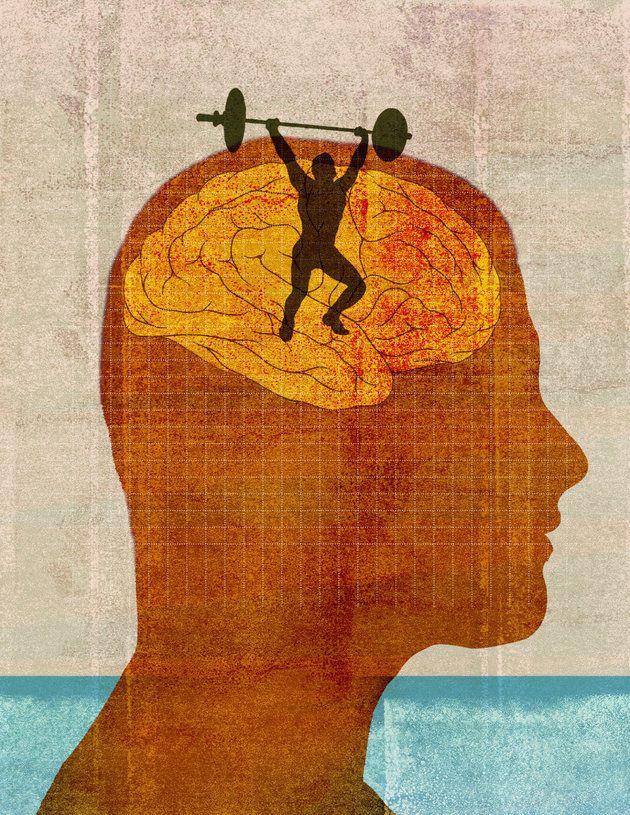
This is where lemon balm becomes especially interesting: it can calm anxiety while improving cognitive performance – a rare combination.
Several trials report improvements in:
- Memory and recall
- Attention and information processing speed
- Problem-solving and cognitive accuracy
A 2003 randomized, double-blind, placebo-controlled crossover study with 20 healthy young adults found that lemon balm (600 mg and 1,000 mg) improved memory performance and increased calmness. Interestingly, the 600 mg dose improved memory without causing sedation, while the 1,000 mg dose had more sedative effects.
A 2014 study found that lemon balm improved cognitive performance in tasks requiring sustained attention and working memory, likely through its effects on acetylcholine (more on this below).
Preclinical and mechanistic research suggests lemon balm inhibits acetylcholinesterase (AChE), the enzyme that breaks down acetylcholine—a neurotransmitter critical for learning, memory, and focus. By preserving acetylcholine, lemon balm can enhance cognitive function even while calming the nervous system.
3.4 Digestive stress and nervous stomach
As a carminative herb, lemon balm has been traditionally used for:
- Bloating, gas, and indigestion
- Stomach cramps and spasms (especially stress-related)
- Irritable bowel syndrome (IBS) symptoms
Lemon balm contains aromatic volatile oils (including citronellal, citral, and rosmarinic acid) that:
- Relax smooth muscle in the digestive tract (antispasmodic effect)
- Reduce inflammation in the gut
- Calm the autonomic nervous system, which regulates digestion
A 2010 study found that lemon balm reduced functional dyspepsia (indigestion) symptoms in participants, with improvements in pain, discomfort, and bloating.
Herbalists often suggest lemon balm for people whose digestive problems get worse with stress, sometimes called a “nervous stomach.”
3.5 Other emerging benefits
While the evidence is still growing, preliminary research suggests lemon balm may also help with:
- Menstrual cramps: Thanks to its antispasmodic properties, lemon balm may reduce dysmenorrhea (painful periods).
- Heart palpitations: Traditional use for benign nervous palpitations is supported by some clinical observations, likely due to its calming effect on the autonomic nervous system.
- Topical antiviral activity: Lemon balm ointments have shown effectiveness against herpes simplex virus (cold sores) in clinical trials.
The most clearly supported benefits are:
- Anxiety and nervous tension (strongest evidence, especially for acute use)
- Sleep quality (particularly when combined with other calming herbs)
- Cognitive function (the calm-focus paradox – calming without “Clouding the mind”)
- Digestive stress (nervous stomach, bloating, cramps)
4. How Lemon Balm Works in Body & Brain
The science behind lemon balm is complex, but here’s an easy way to think about how it works:
Your nervous system has two main modes: “accelerate” (sympathetic, fight-or-flight) and “brake” (parasympathetic, rest-and-digest). Chronic stress keeps the accelerator pressed, leading to anxiety, tension, poor sleep, and digestive upset. Lemon balm helps by:
- Strengthening the brake (enhancing GABA)
- Preserving the focus fuel (protecting acetylcholine)
- Reducing background noise (antioxidant and anti-inflammatory effects)
- Calming the gut-brain axis (linking digestion and emotions)
4.1 Boosting the brain’s brake pedal (GABA enhancement)
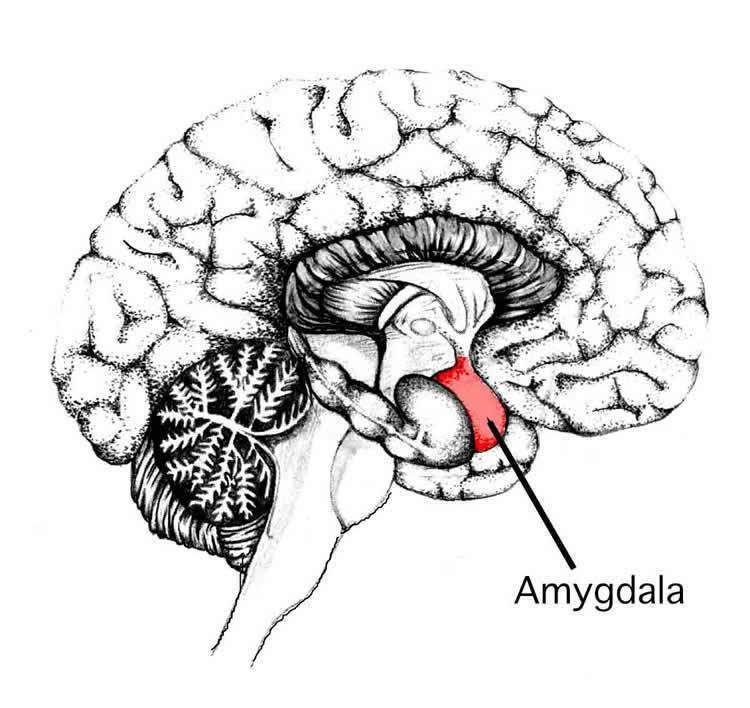
GABA (gamma-aminobutyric acid) is the main inhibitory neurotransmitter in the brain. It helps slow down overactive circuits, especially in regions linked to anxiety, worry, and racing thoughts (like the amygdala).
- Inhibits GABA transaminase (GABA-T), the enzyme that breaks down GABA. By slowing GABA breakdown, lemon balm allows GABA to remain active longer, enhancing its calming effect.
- A 2008 bioassay-guided fractionation study identified rosmarinic acid as the primary GABA-T inhibitor in lemon balm, achieving 40% inhibition at 100 µg/mL. The study also found that ursolic acid and oleanolic acid (triterpenoids in lemon balm) contribute to this activity.
- This mechanism is similar to certain pharmaceutical anxiolytics (like vigabatrin, a GABA-T inhibitor used for epilepsy), but much gentler and without the same side effect profile.
Simply put, lemon balm won’t make you as sleepy as a prescription sedative, but it does help your brain’s natural calming system work better.
4.2 Supporting acetylcholine (the memory & focus connection)
Acetylcholine (ACh) is a neurotransmitter essential for:
- Learning and memory
- Attention and focus
- Muscle control
The brain naturally breaks down acetylcholine using an enzyme called acetylcholinesterase (AChE). Lemon balm inhibits AChE, allowing acetylcholine to stay active longer.
That’s why lemon balm can calm you and boost your thinking at the same time. It doesn’t dull your mind; instead, it helps you stay sharp while easing anxiety.
A 2003 study found that lemon balm was one of the strongest botanical AChE inhibitors tested, helping improve memory and recall in healthy volunteers.
This mechanism is also why lemon balm is being researched for age-related cognitive decline and conditions like Alzheimer’s disease, where acetylcholine levels are typically low.
This is why lemon balm can be calming and cognitively enhancing at the same time.
Learn more about how different herbs support focus and calm
4.3 Antioxidant and neuroprotective effects
Chronic stress increases oxidative stress (damage from reactive oxygen species, or ROS) and inflammation in the brain and body.
Lemon balm contains several potent antioxidants, including:
- Rosmarinic acid (a polyphenol)
- Caffeic acid and ferulic acid
- Flavonoids (luteolin, apigenin)
These compounds:
- Scavenge free radicals, protecting neurons from oxidative damage
- Reduce inflammation by modulating inflammatory cytokines and pathways (like NF-κB)
- Support mitochondrial function, helping brain cells produce energy more efficiently
These protective effects may be why lemon balm has long been used for ongoing nervous system support and is now being studied for conditions that affect the brain as we age.
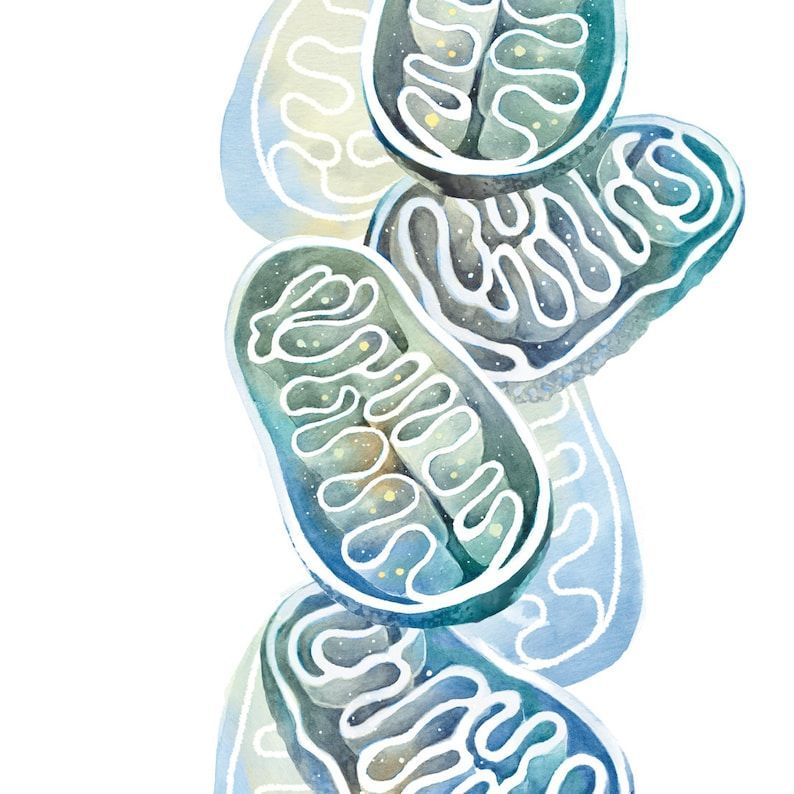
Mitochondria – The powerhouse of the cell
4.4 Calming the gut-brain axis
The gut and brain are intimately connected via the vagus nerve and gut-brain axis. Stress affects digestion, and digestive upset worsens stress – a vicious cycle.
Lemon balm helps break this cycle by:
- Relaxing smooth muscle in the digestive tract (antispasmodic effect), reducing cramps and bloating
- Stimulating digestive secretions (carminative effect), promoting healthy digestion
- Calming the autonomic nervous system, shifting from sympathetic (stress) to parasympathetic (rest-and-digest) mode
- Reducing gut inflammation through its antioxidant compounds
That’s why lemon balm is especially useful for people with digestive problems linked to stress, such as IBS, nervous stomach, or bloating from tension.
5. Forms & Extracts: Tea, Tincture, Capsules & More
Lemon balm comes in many forms, and each has its own benefits depending on what you need and like best.
5.1 Common types you’ll see
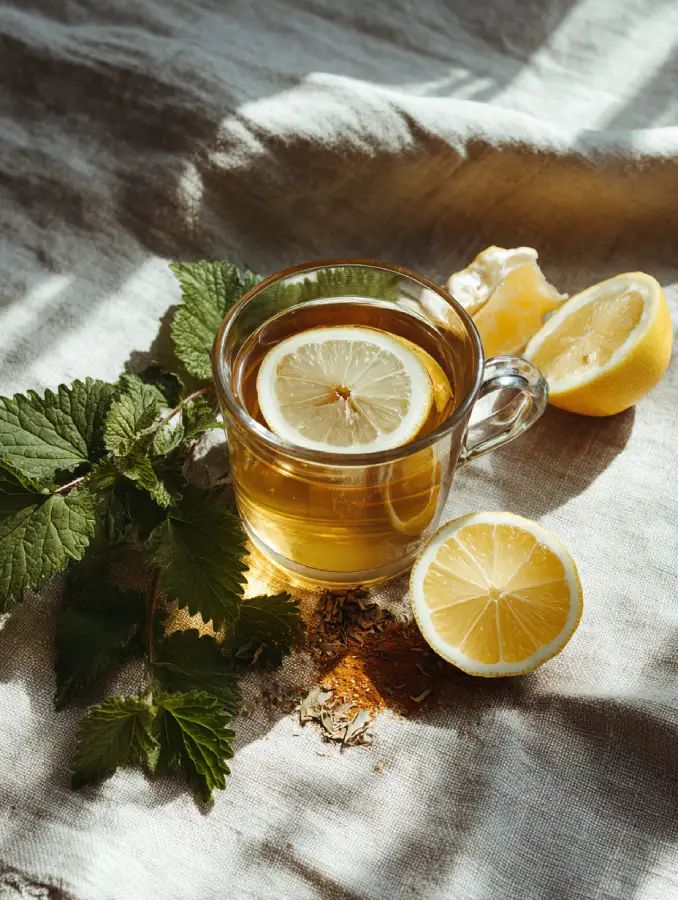
Fresh or dried herb (for tea)
- Fresh leaves: The most traditional and aromatic form. Fresh lemon balm makes a delightful, fragrant tea with a bright lemon flavor.
- Dried leaves: More shelf-stable and widely available. Still effective for tea, though the aroma is less intense than fresh.
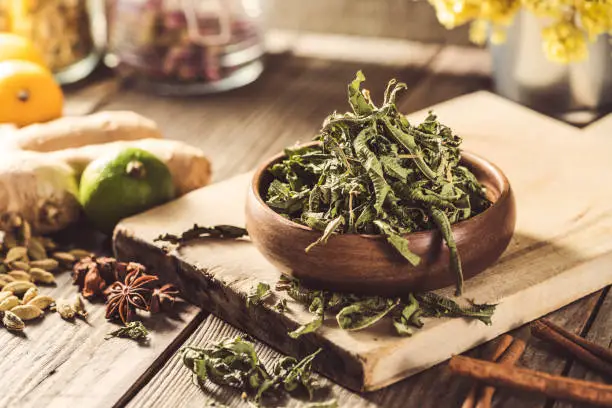
- Typical use: 1-2 teaspoons (or 2-4 grams) of dried herb per cup of boiling water, steeped for 10-15 minutes, covered to preserve volatile oils. 2-3 cups per day for anxiety or sleep support.
For tea recipes using lemon balm, try our Evening Calm Blend or Daily Calm Blend.
Liquid tincture/extract
- Alcohol-based extract: Concentrated and fast-acting. Tinctures are absorbed quickly (sublingually or in water), making them ideal for acute anxiety or digestive upset.
- Typical dose: 2-4 mL (about 40-80 drops), 2-3 times daily, or as needed for acute stress.
- Benefits: Easy to carry, lasts a long time, and lets you adjust the dose as needed.
Capsules or tablets (standardized extracts)
- Standardized extracts: Often standardized to rosmarinic acid content (e.g., 3-5% rosmarinic acid) or total polyphenols.
- Typical dose in studies: 300-600 mg per dose, 1-2 times daily, for anxiety or sleep support.
- Benefits: Convenient, easy to get the right dose, and a good choice if you don’t like the taste of tea or tinctures.
Essential oil (not for internal use without guidance)
- Topical use: Lemon balm essential oil can be used in aromatherapy (diffusers, inhalers) or diluted for topical application (e.g., for herpes simplex).
- Important: Essential oils are very concentrated and should never be taken by mouth unless a professional tells you it’s safe. They are different from teas or tinctures.
5.2 How to read a label (practically)
When evaluating a lemon balm product, ask yourself:
For teas:
- Is it organic? (Avoids pesticides, especially important for daily use)
- Is the herb fresh or recently dried? (Check expiration dates; old herbs lose potency)
For tinctures:
- What is the herb-to-solvent ratio? (E.g., 1:5 means 1 part herb to 5 parts liquid – stronger ratios like 1:2 or 1:3 are more potent)
- What is the alcohol percentage? (Typically 40-60% for lemon balm)
For capsules:
- What is the dose per capsule? (Look for 300-600 mg per capsule of lemon balm extract)
- Is it standardized? (E.g., “standardized to 3% rosmarinic acid” or “10:1 extract ratio”)
- Are there added fillers or other herbs? (Check if it’s pure lemon balm or a blend)
For all forms:
- Is there third-party testing? (Look for COAs – Certificates of Analysis – for heavy metals, pesticides, and microbial contamination)
- Is the brand reputable? (Check for certifications like USDA Organic, NSF, or USP)
Avoid:
- Products with vague labels like “proprietary blend” that don’t list exact amounts
- Products with artificial colors, flavors, or unnecessary additives
- Products that don’t specify the plant part used (aerial parts/leaves are standard for lemon balm)
6. Dosage: What Studies Actually Use (and How to Start)
6.1 Dosage ranges in research
Across randomized controlled trials and systematic reviews, typical doses are:
- For anxiety and stress:
- Acute use (single dose): 300–600 mg of standardized extract
- Chronic use (daily): 300–600 mg, 1–2 times daily, for 2–12 weeks
- Tea: 1.5–4.5 grams of dried herb per day (typically 2–3 cups)
- For sleep quality:
- 300–600 mg of standardized extract taken 30–60 minutes before bed
- Often combined with other herbs (valerian, passionflower) for a stronger effect
- Tea: 1–2 cups in the evening
- For cognitive function:
- A 600 mg single dose showed an optimal balance of calming and cognitive enhancement in studies
- Higher doses (1,000+ mg) can be more sedating and may slightly impair performance
- For digestive support:
- Tea: 1–2 cups after meals or as needed for bloating/cramps
- Tincture: 2–4 mL, 2–3 times daily or as needed
6.2 A practical starting framework (for healthy adults)
This isn’t personal medical advice – just an example of how people often begin. Always adjust based on your health and your doctor’s advice.
If you are sensitive or new to herbs:
- Start with tea: 1 cup (1–2 teaspoons dried herb) in the evening to see how it affects you
- Or start with a low-dose capsule: 150–300 mg once daily
- Take for 1–2 weeks to notice effects on anxiety, sleep, or digestion
If you tolerate it well and want to move toward typical study doses:
- For anxiety/stress: 300–600 mg of standardized extract, 1–2 times daily
- For sleep: 300–600 mg 30–60 minutes before bed, possibly combined with other calming herbs
- For cognitive support: 600 mg once daily in the morning or early afternoon
Important timing notes:
- For anxiety or stress: Can be taken morning, afternoon, or evening
- For sleep: Take 30–60 minutes before bed
- For cognitive function: Take in the morning or early afternoon (avoid before bed if using for focus)
- For digestive support: Take after meals or as needed for acute symptoms
6.3 Duration and timing tips
- Acute use: Lemon balm works relatively quickly (within 30–60 minutes for anxiety or digestive support), making it useful for acute stressful situations
- Chronic use: Most clinical trials run for 2–12 weeks. Lemon balm is generally safe for long-term daily use, but periodic breaks (e.g., 1 week off every 8–12 weeks) may help maintain effectiveness
- Combining with other herbs: Lemon balm pairs well with:
- Passionflower or valerian for sleep
- Chamomile or lavender for gentle relaxation
- Rhodiola or ashwagandha for adaptogenic support (rhodiola in the morning, lemon balm in the evening)
Always:
- Follow the dose on the specific product label
- Consider lower doses if you are smaller, older, or more sensitive
- Notice how you feel. If you get too sleepy during the day, lower the dose or use lemon balm only in the evening.
7. Safety: Common Side Effects, Real Risks & Who Should Avoid It
Lemon balm has a very good safety profile and a long history of safe use. It’s even on the FDA’s GRAS (Generally Recognized as Safe) list.
However, no herb is risk-free, and certain people should use caution.
7.1 Generally very safe (but not risk-free)
Most clinical trials report that lemon balm is well tolerated at typical dosages (300–600 mg/day of extract, or 2–3 cups of tea daily) for up to 12 weeks. Across multiple reviews, serious adverse events are rare.
7.2 Common, usually mild side effects
In trials and traditional use, people occasionally report:
- Mild drowsiness (especially at higher doses or when combined with other sedatives)
- Nausea or digestive upset (rare, usually mild)
- Headache (rare)
- Dizziness (rare)
- Skin irritation (if used topically in sensitive individuals)
These side effects are usually mild and often go away if you adjust the dose or when you take it.
7.3 Drug interactions
Lemon balm may interact with certain medications:
- Sedatives and CNS depressants: Lemon balm can enhance the effects of benzodiazepines, sleep medications, barbiturates, and alcohol. Use caution and consult your doctor if you take these medications.
- Thyroid medications: Lemon balm may affect thyroid function (see section 7.4 below), which could interact with levothyroxine or other thyroid replacement hormones.
- HIV medications: Some evidence suggests lemon balm may interact with antiretroviral drugs, though clinical data are limited.
- SSRIs and antidepressants: Lemon balm’s GABAergic and cholinergic effects could theoretically interact with antidepressants. While no serious interactions have been reported, use caution and inform your doctor.
7.4 Thyroid concerns (small but worth noting)
Lemon balm has been traditionally used in some herbal protocols for hyperthyroidism (overactive thyroid), particularly Graves’ disease. Some evidence suggests it may:
- Reduce thyroid hormone levels (T3 and T4)
- Interfere with thyroid-stimulating hormone (TSH) signaling
- Potentially affect thyroid function tests
What this means:
- For people with hypothyroidism (underactive thyroid) or Hashimoto’s thyroiditis: Lemon balm could potentially worsen symptoms or interfere with thyroid medication. Avoid high doses or use only under medical supervision.
- For people with hyperthyroidism or Graves’ disease: Some practitioners use lemon balm therapeutically to help manage symptoms, but this should only be done under medical guidance.
- For people on thyroid medication (levothyroxine, etc.): Monitor thyroid levels closely if using lemon balm regularly, and inform your doctor.
Important: Lemon balm’s effects on the thyroid depend on the dose and are mostly a concern with high doses or long-term use. Having tea now and then is unlikely to cause issues, but taking high doses every day means you should be careful.
7.5 Groups that should avoid or use with caution
Based on current evidence and expert reviews:
- Pregnant or breastfeeding people: Not enough safety data; generally recommended to avoid or use only under medical guidance
- Children: Limited pediatric data; consult a pediatrician before use
- People with hypothyroidism or on thyroid medication: Use caution; monitor thyroid levels closely
- People taking sedatives, benzodiazepines, or strong sleep medications: Risk of additive sedation
- People with known allergy to plants in the Lamiaceae family (mint, lavender, basil, sage): Avoid lemon balm
- Before surgery: Stop use 1–2 weeks before operations due to potential interactions with anesthesia
A simple safety reminder:
Lemon balm is one of the gentlest nervines, but if you have a complex medical history, use prescription medication, are pregnant, breastfeeding, or planning surgery, treat it like a medicine and consult your doctor before starting.
8. Lemon Balm vs Ashwagandha vs Rhodiola: Comparison
All three are popular herbs for stress, but they work differently and suit different needs.
| Aspect | Lemon Balm | Ashwagandha | Rhodiola |
| Primary effect | Calming, gently uplifting | Deeply calming, grounding | Energizing, uplifting |
| Best for | Anxiety, nervous tension, “calm focus,” digestive stress | High stress load, insomnia, feeling “wired and tired” | Stress-related fatigue, burnout, mental performance |
| Mechanism | Enhances GABA (inhibits GABA-T); protects acetylcholine (inhibits AChE) | Regulates HPA axis and lowers cortisol; increases GABAergic activity | Increases monoamines via MAO inhibition; improves mitochondrial function |
| Timing | Any time (morning for focus, evening for sleep) | Evening or split morning + evening | Morning or early afternoon |
| Effect on sleep | Improves sleep onset and quality | Improves sleep onset and quality | Can interfere with sleep if taken late |
| Effect on mood | Gently uplifting, reduces nervous tension | Calming, reduces anxiety | Uplifting, anti-fatigue |
| Effect on energy | Calming without sedation; supports “calm energy” | Reduces “tired but wired” feeling | Increases mental and physical energy |
| Effect on cognition | Improves memory and focus (calm-focus paradox) | Mixed (may improve focus in some, mild sedation in others) | Improves focus and mental clarity under stress |
| Clinical evidence | Strong for anxiety (especially acute), cognitive function, sleep | Strong for anxiety, stress, sleep, cortisol reduction | Strong for fatigue, cognitive performance, physical endurance |
| Side effect profile | Very mild; rare drowsiness | Mild sedation, possible digestive upset | Mild stimulation, possible jitteriness |
| Thyroid considerations | May lower thyroid hormones (caution with hypothyroidism) | May stimulate thyroid (caution with hyperthyroidism) | May lower thyroid hormones (caution with hypothyroidism) |
In short:
- Choose lemon balm if you want gentle, daily support for anxiety, nervous tension, or restless sleep—without heavy sedation or stimulation. Great for the “calm-focus” effect.
- Choose ashwagandha if you feel anxious, restless, unable to shut off at night, or have high cortisol symptoms. See our Ashwagandha Complete Guide.
- Choose rhodiola if you feel exhausted, foggy, unmotivated, or drained by stress, and need energy and clarity. See our Rhodiola Complete Guide.
- Some people use all three, taking rhodiola in the morning, lemon balm during the day or evening, and ashwagandha before bed, for complementary support.
9. How to Choose a Good Lemon Balm Product
To help you shop more wisely, here’s a simple checklist.
9.1 Quality checklist
When evaluating a lemon balm product, look for:
For all forms:
- Clear plant name and part: “Melissa officinalis aerial parts (leaf)” rather than vague “lemon balm blend.”
- Organic certification: Especially important for daily use (USDA Organic, EU Organic, etc.)
- Third-party testing: COAs for heavy metals, pesticides, microbial contamination
- Transparent ingredient list: No unnecessary fillers or additives
- Reputable brand: Look for brands with good reviews, certifications, and quality control practices
For teas:
- Fresh aroma and bright green color (not brown or musty-smelling)
- Recent harvest date or expiration date at least 1–2 years out
For tinctures:
- Clear herb-to-solvent ratio (e.g., 1:5, 1:3)
- Alcohol percentage listed (40–60% is typical)
- Organic or wildcrafted herb source
For capsules:
- Standardization: “Standardized to 3–5% rosmarinic acid” or “10:1 extract ratio.”
- Dose per capsule: 300–600 mg of lemon balm extract
- No fillers or artificial additives
Avoid:
- Products that don’t specify the plant part (should be aerial parts/leaves)
- Products with vague “proprietary blends” that hide exact amounts
- Products with artificial colors, flavors, or sweeteners (unless intended for taste in teas)
- Products that make exaggerated claims (“cures anxiety,” “guaranteed results”)
10. How to Start: A Gentle, Step-by-Step Approach
You can give yourself a simple protocol outline like this:
1. Clarify your “why.”
- Anxiety or nervous tension during the day?
- Trouble falling asleep or staying asleep?
- Digestive upset linked to stress?
- Want to improve focus while staying calm?
This helps you notice if lemon balm is making a difference for you.
2. Choose your form
- Tea: Best for ritual, gentle daily support, and people who enjoy the taste and process
- Tincture: Best for acute anxiety or digestive upset (fast-acting, portable)
- Capsules: Best for consistent dosing and convenience
3. Start low for 1–2 weeks
- Tea: 1 cup (1–2 teaspoons dried herb) in the evening
- Tincture: 2 mL (40 drops), 1–2 times daily
- Capsules: 150–300 mg once daily
Notice: calmness, sleep quality, focus, digestion, and any drowsiness or side effects.
4. If you handle it well, adjust to typical study doses
- For anxiety/stress: 300–600 mg of extract (or 2–3 cups of tea), 1–2 times daily
- For sleep: 300–600 mg 30–60 minutes before bed
- For cognitive support: 600 mg once daily in the morning or early afternoon
5. Give it time
- Realistic window: Lemon balm works relatively quickly for acute anxiety (30–60 minutes), but 2–4 weeks for fuller effects on sleep, mood, and stress resilience
6. Check in with your body
- Are you calmer during the day?
- Is your sleep more restful?
- Is your digestion more comfortable?
- Any side effects (drowsiness, nausea, weird symptoms)?
If uncertain, take a 1–2 week break and see what changes.
7. Consider combining with lifestyle practices
- Morning light exposure (supports circadian rhythm and mood)
- Breathing exercises (4-7-8 breathing, box breathing)
- Gentle movement (yoga, walking, stretching)
- Digital sunset (reduce screens 1–2 hours before bed)
Lemon balm is most effective when it’s part of a bigger plan to care for your nervous system.
11. A Simple Lemon Balm Ritual (to Make It More Than Just a Pill)
Lemon balm is a great addition to an evening wind-down routine—a simple way to let your body and mind know it’s time to shift from activity to rest.
Evening lemon balm + nervous system reset
About 60–90 minutes before bed:
- Prepare your lemon balm tea or take your dose:
- If tea: Use 1–2 teaspoons of dried lemon balm (or a handful of fresh leaves) in 1 cup of hot water. Steep for 10–15 minutes, covered.
- If tincture or capsule: Take with a small glass of water.
- Create a calming environment:
- Dim the lights or switch to warm, soft lighting (avoid blue light from screens)
- Light a candle or use a diffuser with calming scents (lavender, chamomile, bergamot)
- Play gentle music or nature sounds (or simply enjoy silence)
- Do 5 minutes of slow breathing:
- Inhale for 4 counts, hold for 2, exhale for 6–8 counts
- Feel the warmth of the tea in your hands, the scent of lemon balm in the air
- Let your shoulders drop, your jaw relax, your belly soften
- Journal three sentences (optional):
- One thing you’re grateful for today
- One thing you’re letting go of (worries, tasks, unfinished business)
- One intention for restful sleep (“I trust my body to rest and restore”)
- Drink your tea slowly, mindfully:
- Notice the lemony, slightly sweet taste
- Feel the warmth moving down your throat into your belly
- Let each sip be a reminder: “This is care. This is calm.”
Repeating a simple ritual like this can help your brain connect lemon balm with feelings of safety, rest, and renewal, making it a meaningful part of your self-care routine.

12. Final Thoughts: Is Lemon Balm Right for You?
Lemon balm (Melissa officinalis) is one of the gentlest, most accessible nervines available. Clinical studies suggest it can:
- Reduce anxiety and nervous tension (especially in acute situations)
- Improve sleep onset and quality (particularly when combined with other calming herbs)
- Enhance cognitive function while maintaining calm (the calm-focus paradox)
- Soothe stress-related digestive issues (nervous stomach, bloating, cramps)
It appears to function through multiple mechanisms:
- Enhancing GABA (by inhibiting GABA transaminase)
- Protecting acetylcholine (by inhibiting acetylcholinesterase)
- Reducing oxidative stress and inflammation
- Calming the gut-brain axis
At the same time, responsible use means:
- Respecting typical dosages (300–600 mg of extract, or 2–3 cups of tea daily)
- Being aware of potential interactions with thyroid medication, sedatives, and certain drugs
- Avoiding use in pregnancy, breastfeeding, hypothyroidism, and complex medical situations without professional guidance
- Choosing high-quality, organic products from reputable sources
Lemon balm is especially well-suited for:
- People who want gentle, daily support for anxiety or stress
- People who need to stay calm and focused during the day
- People with nervous tension that affects sleep or digestion
- People who prefer a mild, non-sedating nervine over stronger options
Lemon balm may not be the best choice for:
- People with severe, chronic anxiety or depression (professional treatment is needed)
- People with hypothyroidism or on thyroid medication (unless monitored by a doctor)
- People who need strong, immediate sedation for severe insomnia (consider stronger herbs or medical support)
If you view lemon balm as helpful support rather than a cure-all, it can be a valuable part of a bigger plan that includes rest, healthy habits, movement, time outdoors, and other lifestyle or herbal supports.
If you want gentle, daily calm without feeling foggy or sleepy, lemon balm could be worth trying. Start with a cup of tea, notice how your body feels, and give it some time to see the effects.
Scientific Backing:
2021 meta-analysis (anxiety SMD: -0.98, p=0.003) https://onlinelibrary.wiley.com/doi/abs/10.1002/ptr.7252
2024 clinical review (10 RCTs, acute stress attenuation) https://pmc.ncbi.nlm.nih.gov/articles/PMC11510126
2003 cognitive trial (600 mg optimal for calm-focus) https://pubmed.ncbi.nlm.nih.gov/12888775